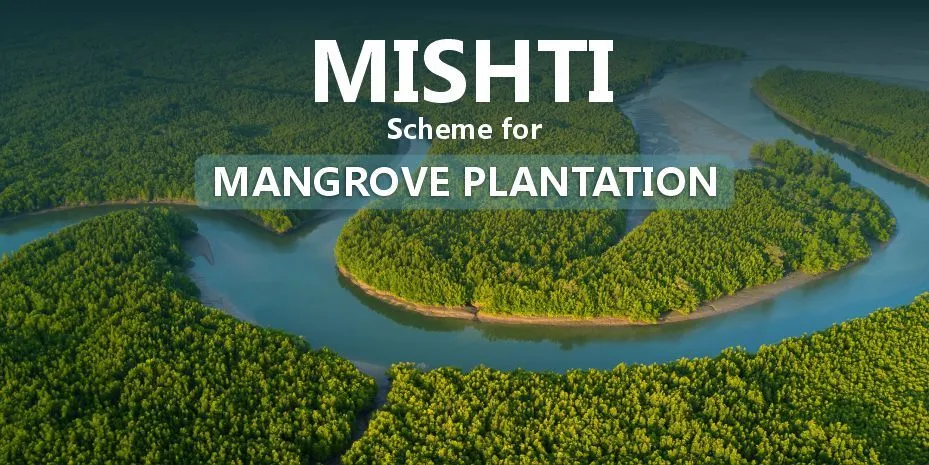
The initiatives of the Government of India towards India Coastal Ecosystem Restoration are now showing rapid impact. Launched in June 2023, the Mangrove Initiative for Shoreline Habitats and Tangible Income (MISHTI) scheme was implemented with the aim of securing the country’s coastal areas, increasing biodiversity and providing employment to local people.
According to official data, mangrove restoration work has been completed in 9,536 hectares of area at a cost of ₹88.44 crore so far. The project targets a total area of 54,000 hectares in 13 coastal states and union territories. Gujarat is at the forefront of the drive, with about 85 per cent of the total recruitment completed. These figures prove that India is making rapid progress in the field of coastal environmental protection.
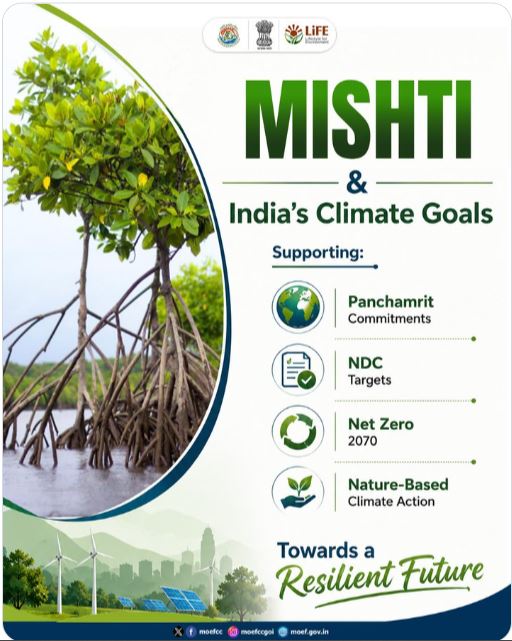
Mangrove forests are not only trees, but natural shields providing protection from sea storms, floods and coastal erosion. Scientific studies show that mangroves store large amounts of carbon, which is helpful in reducing the effects of climate change. The mangrove areas restored under the MISHTI scheme are strengthening the fishing industry, as they provide safe breeding grounds for marine life. This has the potential to increase the income of thousands of fishing families.

According to experts, the scheme could create about 22.8 million man-days of employment. It is proving to be very important economically for people living in coastal areas. This model of balancing employment with environmental protection is being appreciated internationally. Mangrove restoration will also play an important role in achieving India’s net-zero emissions target by 2070.
The success of India Coastal Ecosystem Restoration demonstrates that when environmental protection and economic development go hand in hand, sustainable development is possible. The results of the MISHTI scheme so far provide strong evidence of the government’s strategy.

If mangrove restoration is successfully completed in 54,000 hectares as per the set target, then India can not only make its coastal zone more safe, but also contribute significantly to the global climate conservation drive. The initiative is expected to deliver long-term benefits to coastal communities, the environment and the economy of the country.