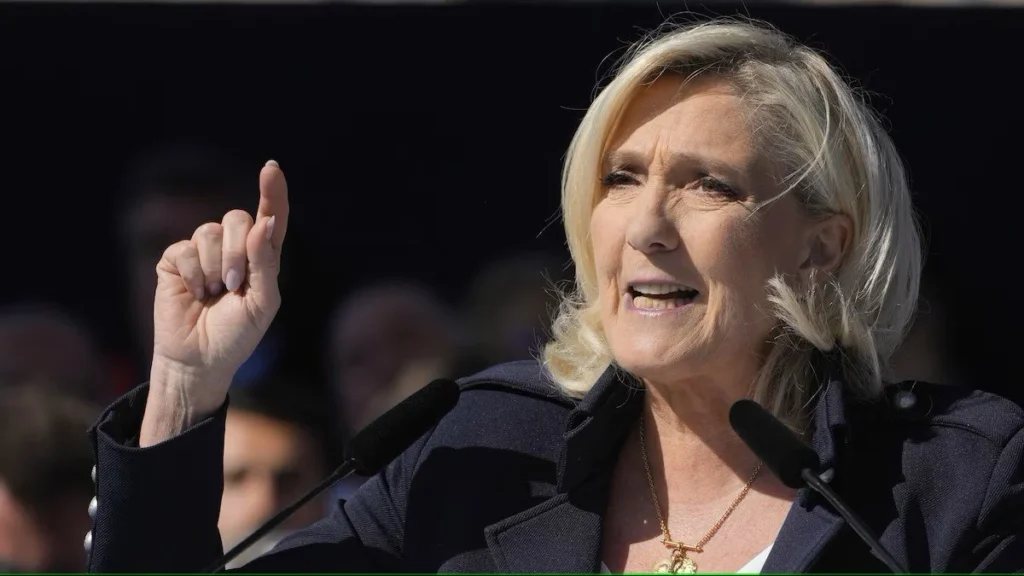
Prominent French opposition leader Marine Le Pen has once again found herself at the center of discussions regarding Middle East politics following a recent statement. Openly supporting Israel, Le Pen stated that France should stand with Israel to weaken Hezbollah’s military strength. According to her, Hezbollah is not merely a Lebanese organization but an extension of Iran’s regional influence.
Marine Le Pen remarked, “We must support Israel in this conflict because Hezbollah is essentially an entity linked to Iran.” This statement has sparked a heated debate within French political circles. She further argued that right-wing parties in France need to find solutions to revitalize Lebanon’s institutions.
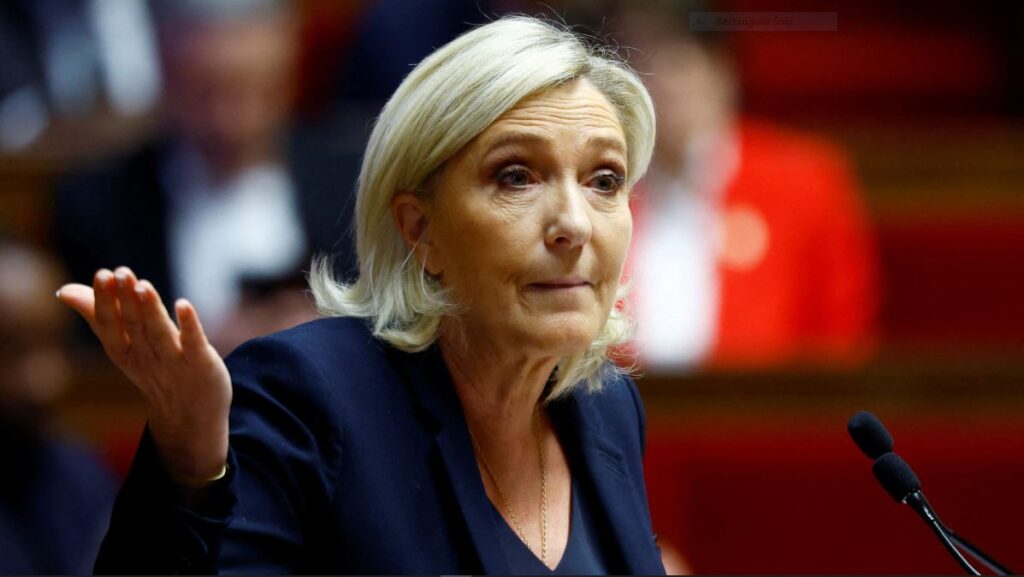
Lebanon has been grappling with economic crisis, political instability, and security challenges for years. Serious questions regarding the country’s administrative system were raised following the 2020 Beirut port explosion. Since then, the international community has consistently called for a stable government and strong institutions in Lebanon. Le Pen’s statement appears to be steering this ongoing debate in a new direction.
France has historically maintained deep ties with Lebanon, having provided political and economic assistance on numerous occasions in the past. Consequently, Le Pen has now called for a special debate in the National Assembly—the lower house of the French parliament—to clarify France’s official policy regarding the Middle East crisis.
Political analysts believe that Le Pen’s statement extends beyond mere foreign policy. Issues concerning security, immigration, and international conflicts often impact domestic politics in France. Adopting a firm stance on the Middle East issue amidst preparations for the 2027 presidential election could help her appeal to her supporter base.
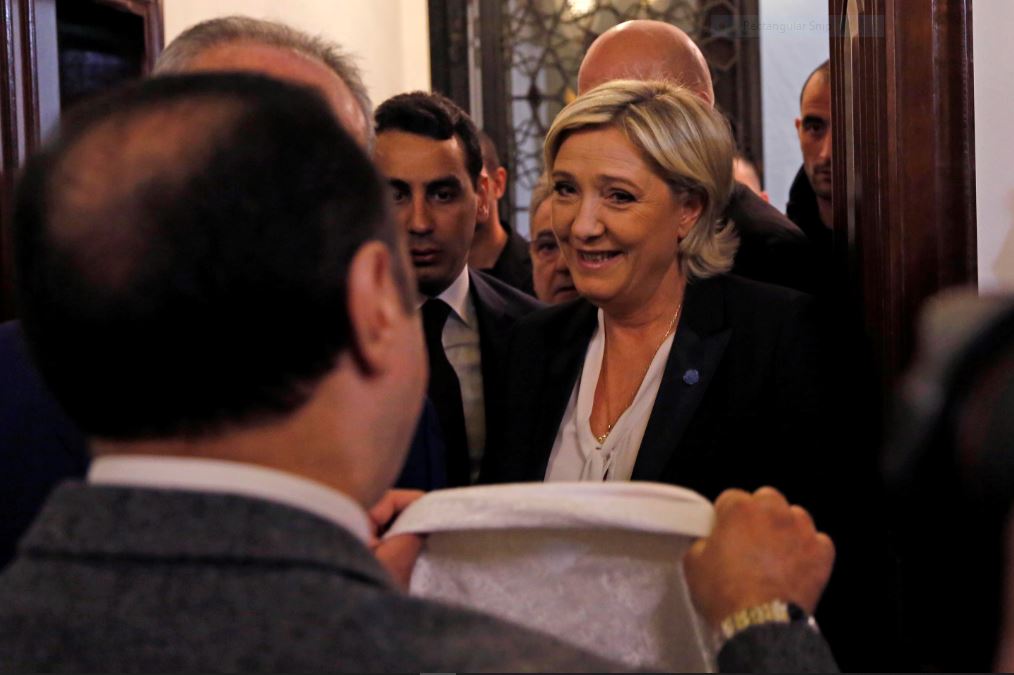
However, some political parties and human rights groups in France do not agree with this stance. According to her, solutions to regional conflicts should be sought through diplomatic dialogue rather than military action. Critics believe that if tensions escalate further, instability could increase in Lebanon and the entire region.
Currently, the most significant development is Le Pen’s call for a debate in the National Assembly. If this debate takes place, it could spark a new political discussion regarding France’s Middle East policy, Israel-Lebanon relations, and regional security strategy. The world is now watching to see what official stance France adopts on this sensitive issue.
These developments make it clear that the Middle East conflict is no longer merely a regional issue but has become part of major political discourse in Europe. France’s decisions in the near future could impact the diplomatic equations involving Israel, Lebanon, and the entire region.