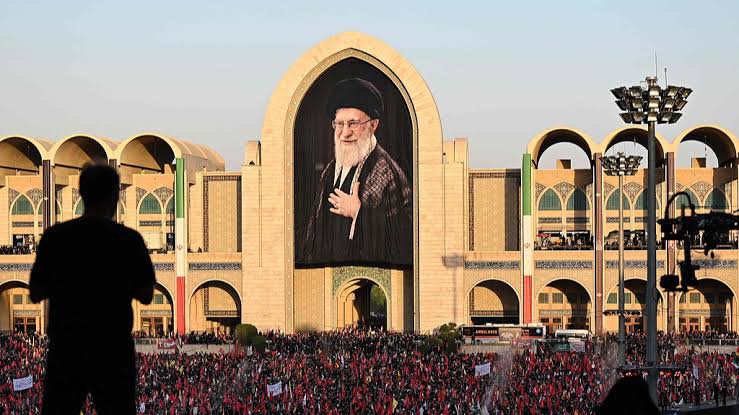
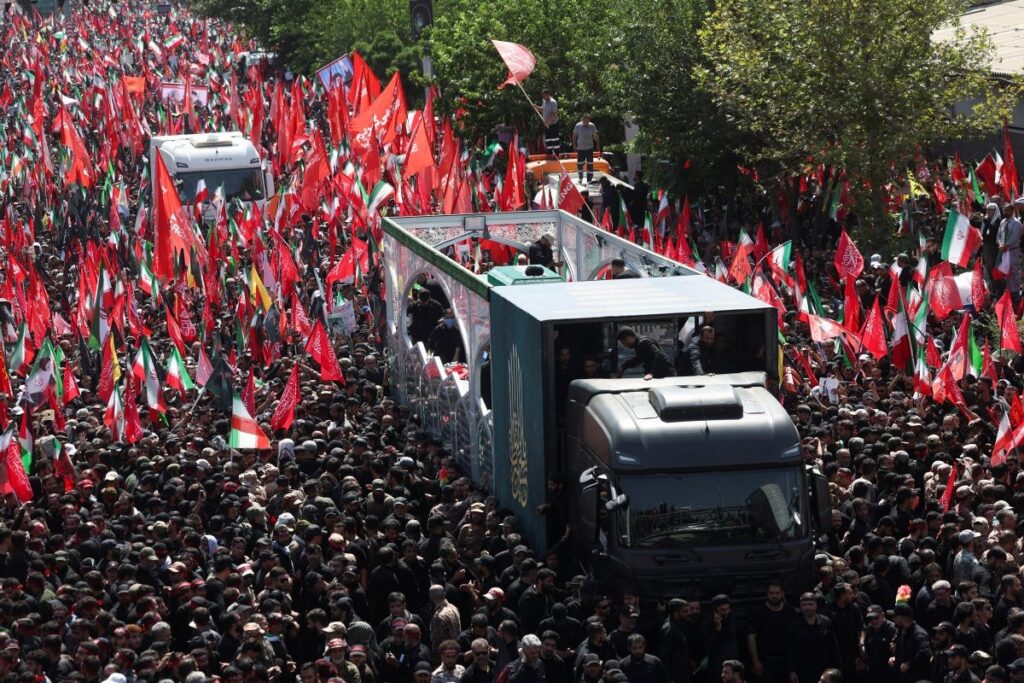
On July 6, 2026, millions of people took to the streets in Iran Funeral Procession 2026 during the funeral procession of former Supreme Leader Ali Khamenei. Iranian state media claimed that approximately 12 million people participated in the multi-day mourning events. While this figure has not been independently verified by international agencies, Reuters and other major news outlets confirmed that the crowd was extraordinarily large.
The procession moved from Revolution Square to Azadi Square. People waved Iranian flags, chanted religious slogans, and paid tribute to Khamenei. Amidst this, some demonstrators also displayed posters and banners protesting against the United States and Israel.
During the event, some posters featured photographs of US President Donald Trump, political commentator Laura Loomer, author Ben Shapiro, businesswoman Miriam Adelson, and US Senator Lindsey Graham, accompanied by threatening messages.
Effigies of Trump were also hung in some locations. These scenes went viral rapidly across social media and international news outlets.
Advertisment
This funeral procession took place roughly five months after the conclusion of the Iran Funeral Procession 2026 war. A Memorandum of Understanding (MoU), brokered by Pakistan, had been reached; it focused on extending the ceasefire, reopening the Strait of Hormuz to shipping, and paving the way for nuclear negotiations. Despite this agreement, trust between the US and Iran remains fragile.
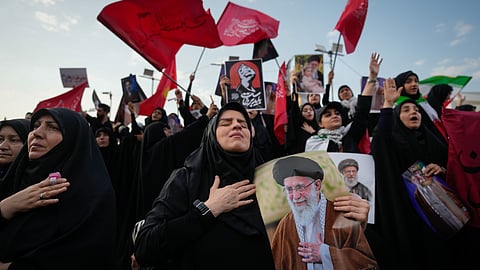
Iran’s Foreign Minister stated clearly that if the US continued to issue military threats, it would be difficult for nuclear talks to progress. Meanwhile, several US leaders reacted to the threatening posters. Senator Lindsey Graham remarked that having his name on the list was a “badge of honor” and asserted that such threats would not alter US policy.
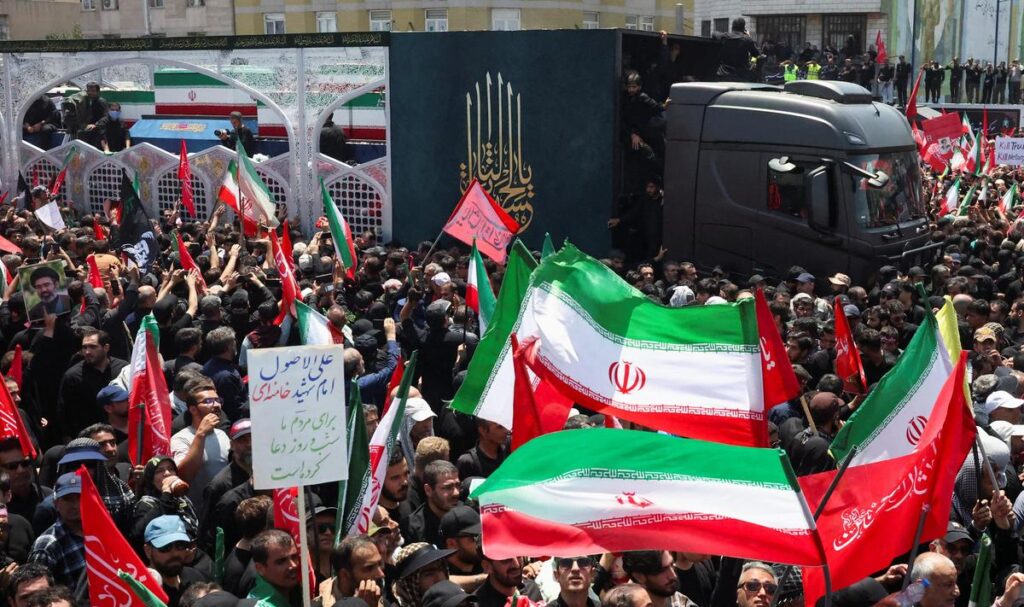
Analysts believe that the funeral procession was not merely a religious event but also conveyed a strong message regarding Iran’s domestic politics and foreign policy. While the government sought to demonstrate public unity, Western nations viewed the event as a sign of escalating tensions.
The most critical question now is whether the peace process initiated through Pakistan’s mediation will move forward, or if US-Iran relations will once again veer towards confrontation due to threats, political rhetoric, and mutual distrust. The coming months are considered crucial for regional security and global politics.