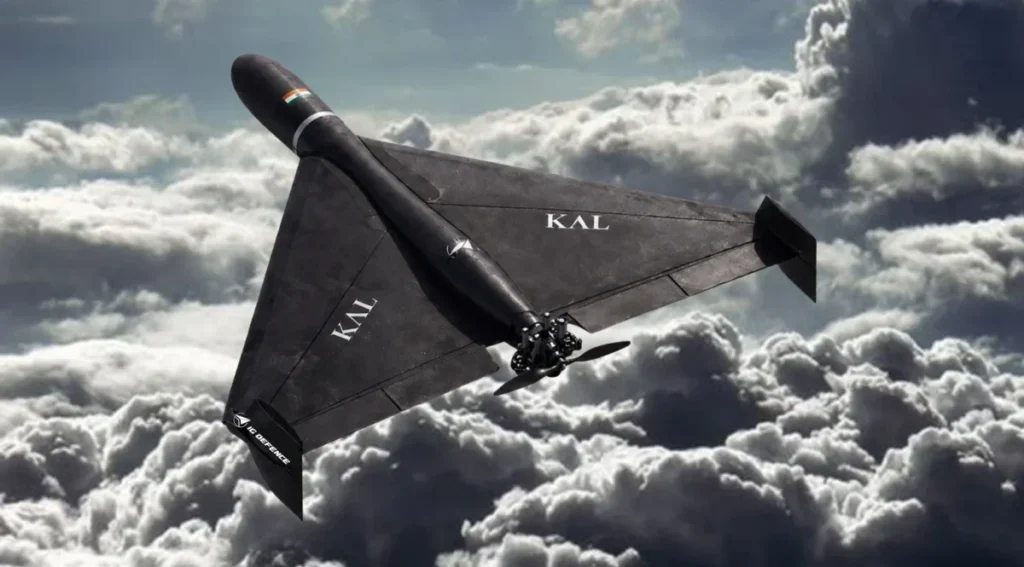
India has taken another step in the development of indigenous drone technology. KAL, a long-range one-way attack drone designed and developed by IG Defence, has successfully completed a trial at the Pokhran Field Firing Range in Rajasthan.
The trial highlights the growing role of Indian companies in the development of advanced unmanned defence systems. KAL belongs to a category of drones designed to carry out a mission against a designated target.
KAL Drone Completes Trial at Pokhran
The KAL drone underwent its latest trial at the Pokhran Field Firing Range. The range in Rajasthan serves as an important location for testing Indian defence systems.
During the trial, the development team assessed the drone under a controlled testing environment. Such trials help developers check a system before moving toward further development and evaluation.
The successful trial marks an important stage in the development of the KAL platform. Further tests can provide more information about its performance and reliability.
What Is a One-Way Attack Drone?
A one-way attack drone is an unmanned aircraft designed for a single mission. It travels toward a selected target and does not return to its launch location after completing the mission.
These systems can carry out missions without putting a pilot inside the aircraft. As a result, they offer a different approach from traditional manned aircraft.
Long-range capability also allows such drones to operate over greater distances. However, the exact range and other technical specifications of KAL depend on official information and future testing.
Indigenous Defence Technology
The development of KAL reflects India’s increasing focus on indigenous defence technology.
Indian defence companies now work on a wide range of unmanned systems. These include drones for surveillance, reconnaissance, logistics and combat missions.
Domestic development can also help India build technical expertise in areas such as flight control, navigation, communication and autonomous systems.
KAL adds another platform to this growing Indian drone ecosystem.
Why Drone Technology Matters
Drones have become an important part of modern military operations. Armed forces around the world use unmanned systems for different roles.
A drone can perform certain missions without placing a pilot directly in danger. Long-range platforms can also provide forces with additional options during military operations.
However, each drone has a specific role and set of capabilities. A successful trial alone cannot establish the complete operational performance of a system.
Developers normally conduct multiple tests before a defence platform reaches wider operational use.
Pokhran Trial Marks Another Development Step
The Pokhran trial gives the KAL development programme an opportunity to gather important performance data.
Testing can help engineers identify areas that need improvement. Developers can then use the results to refine the system during later stages.
Future trials could provide more details about the drone’s flight performance, navigation, reliability and other capabilities.
The results of those tests will help determine how the platform develops in the future.
India Expands Its Indigenous Drone Ecosystem
India has placed increasing emphasis on domestic defence production and technology development.
Private companies and government organisations are working on different types of unmanned platforms. These projects cover both military and civilian applications.
The growth of this ecosystem can help Indian developers gain experience in advanced aerospace and unmanned technologies.
KAL represents another example of this development in the long-range drone segment.
What Comes Next for KAL?
The successful Pokhran trial represents one stage in the development of the KAL drone.
Further testing will remain important for understanding the platform’s complete capabilities. Developers may evaluate the drone under different conditions during future trials.
Official updates from IG Defence and relevant defence authorities will provide more information about the platform’s progress.
For now, the successful trial demonstrates that India continues to develop indigenous solutions in the rapidly expanding field of unmanned aerial technology.
Conclusion
The successful trial of KAL, a long-range one-way attack drone developed by IG Defence, marks another step in India’s indigenous drone development efforts. Further trials and evaluations will provide a clearer picture of the platform’s capabilities and future role.