India plans to send its first pilot cargo vessel via Russia’s Northern Sea Route (NSR) in 2027. This development is considered highly significant for India-Russia trade and growing cooperation in the Arctic region. S. Venkatesapathy, Joint Secretary in the Indian Ministry of Shipping, announced the plan to operate the first pilot vessel via the NSR in 2027 while speaking at the Arctic-Regions Forum held in Arkhangelsk, Russia, on August 13, 2026.
What is the Northern Sea Route?
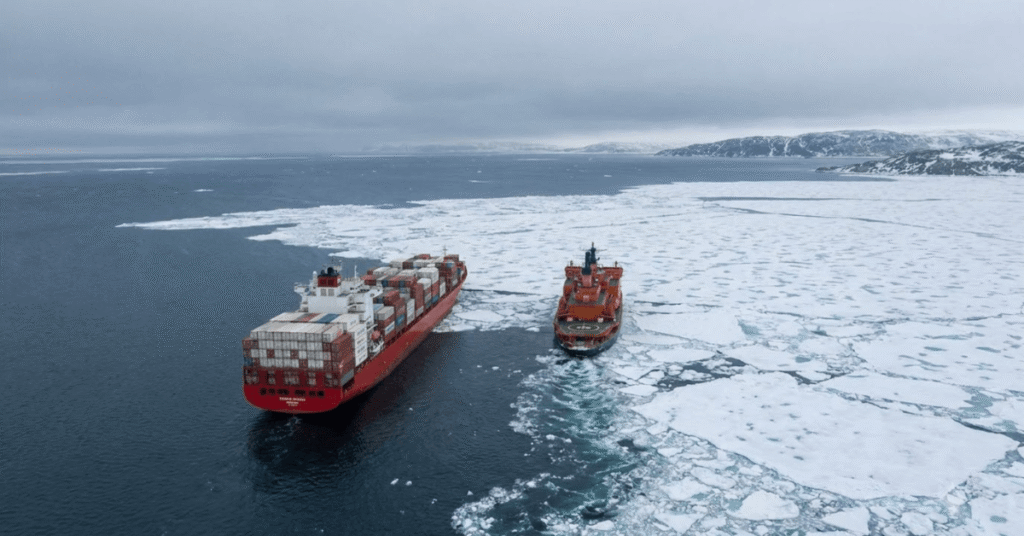
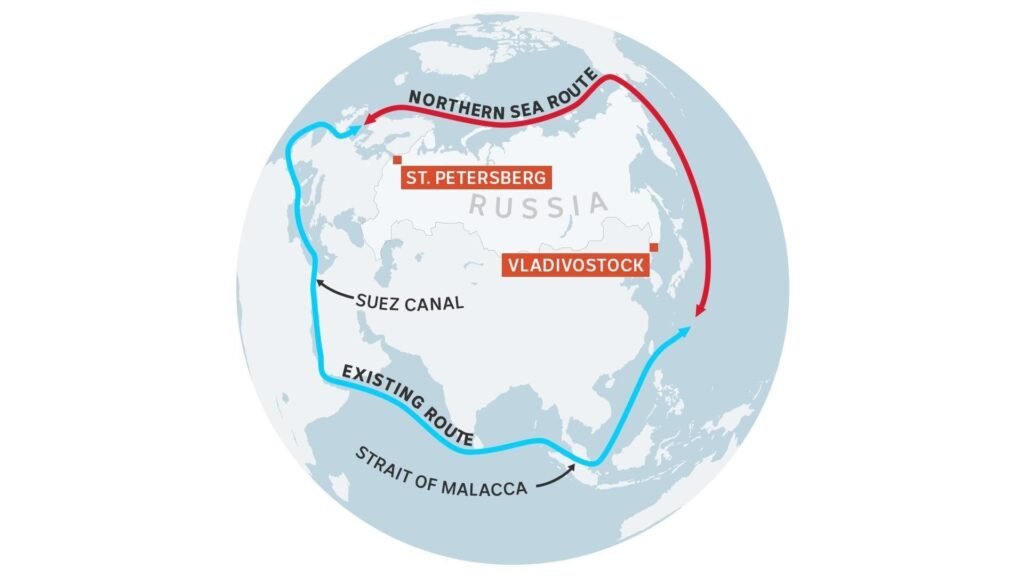
The Northern Sea Route is a maritime passage running along Russia’s Arctic coast. It offers a significantly shorter sea connection between Europe and Asia compared to the traditional Suez Canal route. Spanning approximately 5,500–5,600 kilometers, the Arctic route traverses Russia’s northern coastline. However, standard vessel operations are challenging here due to harsh weather, sea ice, and a limited navigation season; specialized icebreaker support may be required in several areas.
Why is India looking at this route?
Trade relations between India and Russia are steadily growing. Utilizing the NSR could connect India with Russia’s Far East and Arctic regions. Following the development of the Chennai-Vladivostok Eastern Maritime Corridor, India is now exploring the potential of the Arctic route as well.
According to Venkatesapathy, cargo movement along the Chennai-Vladivostok corridor has increased by 70 percent. India is now looking to extend this experience to the Northern Sea Route.
Russia is also investing in NSR infrastructure, ports, and its icebreaker fleet. In July 2026, the Russian government approved a proposal by Rosatom to work on a memorandum aimed at enhancing cooperation between India and Russia regarding maritime cargo transportation via the NSR.
Could it become an alternative to the Suez Canal?
The primary appeal of the NSR lies in the reduction of distance and potential transit time. According to information from Russia, this route could be significantly shorter than the traditional Suez route for certain Asia-Europe journeys. Recent reports cite examples where the travel time between China and Europe via the NSR has dropped from 40 days to approximately 18 days. However, it would be incorrect to assume uniform time savings for every India-Russia shipment, as factors such as the specific route, cargo type, weather conditions, and transshipment requirements can vary.
Challenges Remain
The biggest challenge in utilizing the Northern Sea Route is the harsh Arctic weather. Due to factors like sea ice, seasonal navigation windows, the need for icebreaker support, specialized vessels, and associated costs, this route has not yet become a direct replacement for the Suez Canal.
A 2025 logistics assessment also noted that there is currently no regular liner service between India and Russia via the NSR, and the route is sensitive to cost fluctuations due to navigation and icebreaker requirements.
For this reason, the proposed 2027 Indian voyage is being viewed as a pilot project. Final decisions regarding the specific type of vessel, the operator, and the cargo have not yet been publicly announced.
A New Chapter in India-Russia Trade
If the 2027 pilot voyage proves successful, it could pave the way for the regular use of Arctic shipping lanes between India and Russia. This holds the potential to enhance India’s logistics diversification, improve connectivity to Russia’s Far East, and strengthen India’s commercial presence in the Arctic.
While the plan is currently in its initial stages, India’s growing interest in the NSR signals that the Arctic is evolving from a region dedicated solely to scientific research into a key component of global trade and strategic connectivity.