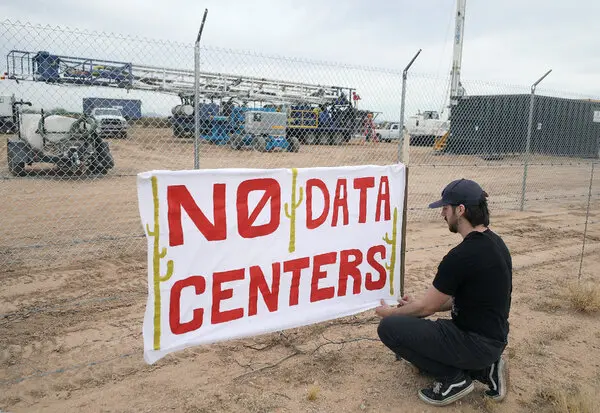
Massive data centers are being built across the globe to keep pace with the rapidly growing use of AI Data Center Infrasound. These facilities operate around the clock, relying on thousands of servers, heavy-duty cooling systems, and—in many locations—turbines powered by natural gas. In several countries, including the United States, local residents claim to be experiencing issues such as dizziness, nausea, insomnia, and restlessness after living near these data centers.
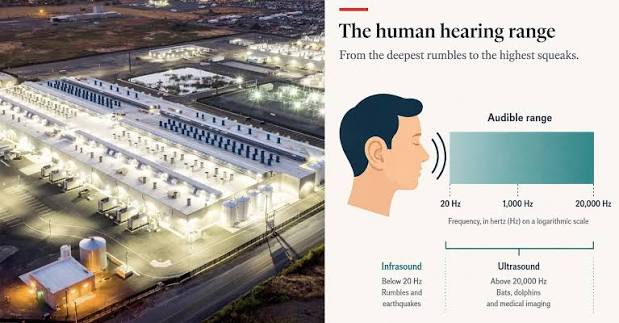
Many experts suggest that these problems could be linked to AI Data Center Infrasound—sound waves with a frequency below 20 Hertz. While the human ear cannot clearly perceive these sounds, some scientific studies indicate that intense low-frequency vibrations can affect the body’s vestibular system, which governs balance. However, there is currently no consensus within the scientific community on this matter.
The massive cooling fans, chillers, and gas turbines used in AI data centers can generate continuous low-frequency noise. Many environmental experts point out that existing noise regulations primarily measure audible noise; infrasound below 20 Hertz is often not accurately recorded in standard noise tests. Consequently, even if a data center operates within legal limits for audible noise, nearby residents may still complain about experiencing low-frequency vibrations.

Reports indicate that many hyperscale technology companies are prioritizing the construction of data centers in rural areas. Experts note that rural locations offer cheaper land, easier access to power infrastructure, and, in many cases, less complex regulatory processes compared to urban areas. Some industry analysts also highlight that grid connections can take years to establish, prompting some companies to opt for generating their own electricity using “behind-the-meter” gas turbines.
However, the concerns of local residents extend beyond just noise. Some people fear that this massive project could lead to a decline in property values. If a family purchased a home prior to the announcement of the data center, selling it later might prove difficult. However, the situation varies by region, and comprehensive studies on this matter are currently underway.
From a scientific perspective, the World Health Organization (WHO) and the International Commission on Biological Effects of Noise (ICBEN) acknowledge that environmental noise can impact human health. However, there is currently no strong scientific evidence confirming that infrasound from AI data centers is a primary cause of dizziness, nausea, or sleep disturbances. Experts emphasize the need for further research.
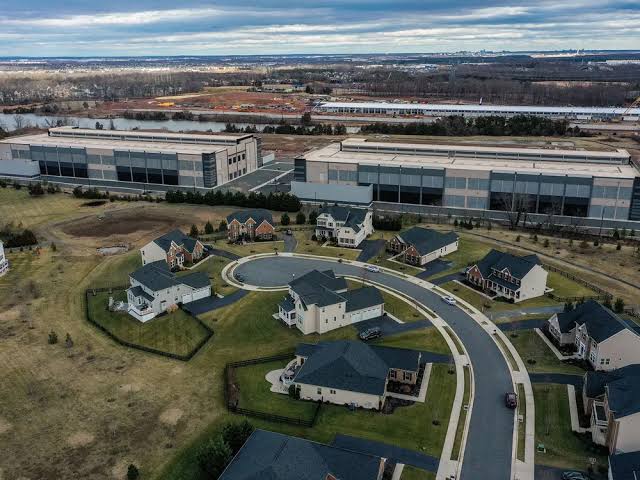
AI infrastructure is set to expand rapidly in the near future. Consequently, there is a growing demand for independent studies regarding environmental impacts, low-frequency noise monitoring, and the health of local communities. If future scientific research clearly establishes a link, the government could revise noise standards and zoning regulations. For now, however, a balanced approach is required—one that takes local concerns seriously while also giving due weight to scientific evidence.