Glasgow Protests After Belfast Stabbing has sparked vigorous debate on immigration policy and public safety issues in the United Kingdom. On June 9, Hadi Alodid, a 30-year-old Sudanese refugee, was charged with stabbing Stephen Ogilvie in north Belfast. Ogilvie reportedly lost the sight of one eye in the attack. The suspect was arrested by police and charged with attempted murder. Tensions escalated in Belfast as news of the incident emerged, with people taking to the streets to protest.
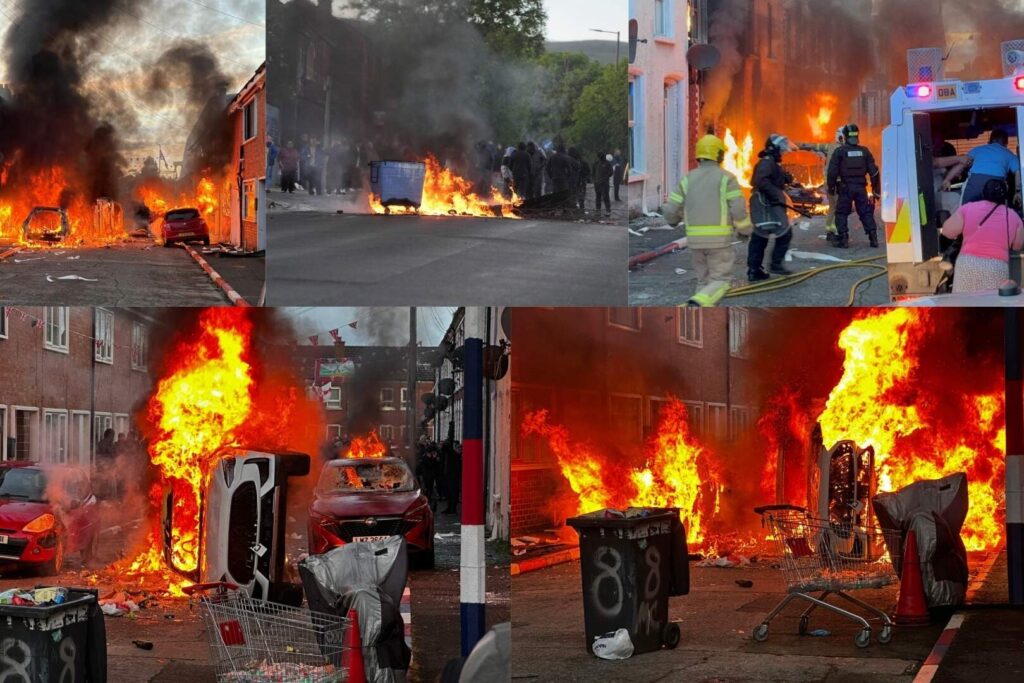
Protests in Belfast quickly turned violent. There were reports of vehicle arson, roadblocks and clashes with police in several places. Several officers were injured and dozens were arrested, according to police. The local administration continued to appeal for calm, but public sentiment became more aggressive as discussion of the incident intensified on social media. The effects of this situation extended to Scotland, where people began to demonstrate against immigration and the asylum system.
In the city of Glasgow, hundreds of protesters gathered around Buchanan Steps and later George Square. Protesters waved British flags. Many held posters demanding the government to strengthen border security. Demonstration organizers said the protest was not against any particular community, but against increasing illegal migration and pending asylum applications. More than 100,000 asylum applications are said to be currently pending in the United Kingdom, while thousands are staying in temporary hotels.
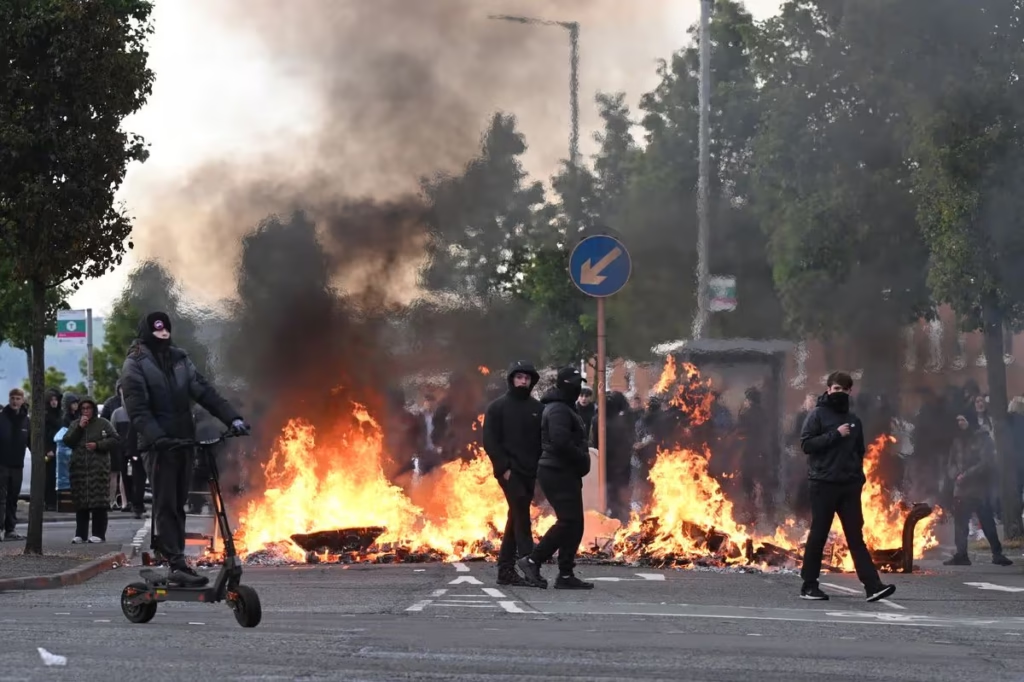
During the Glasgow Protests After Belfast Stabbing harsh slogans were also raised by some groups, which later became the focus of national media attention. Police officers monitored the demonstration to maintain law and order. Minor clashes and arrests were reported in some places, although most of the demonstrations were described as peaceful. Security agencies are insisting that it would not be appropriate to draw any conclusions before the legal process is completed.
Analysts believe the incident is no longer solely a criminal case, but has become a national debate on UK immigration policy, border control and social cohesion. While people are expressing concerns over public safety, human rights groups are warning that it would not be fair to hold the entire refugee community responsible based on certain incidents. The challenge facing the government is to balance humanitarian responsibility while ensuring security.
More demonstrations are expected in the coming days. The administration is preparing to deploy additional police forces and appeals to the public to maintain peace. The whole country is currently watching the case, as a local attack has now become a national political issue. The investigation is ongoing and the court is awaiting the next hearing of the case.