
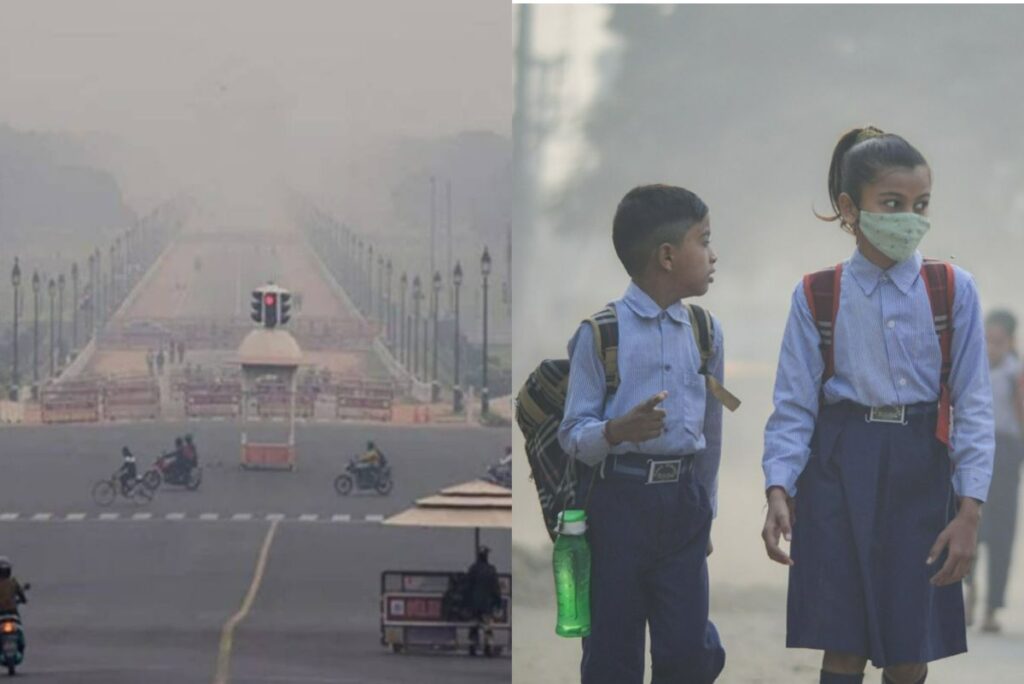
This winter, the air in Delhi has once again become toxic. On the morning of December 15, 2025, the Air Quality Index (AQI) was recorded above 450 at several places, moving from ‘critical’ to ‘hazardous’ category. According to the Central Pollution Control Board (CPCB), the city’s average AQI ranged between 461 and 498, while at a few stations like Rohini, Wazirpur, and Jehangirpuri, it touched 500—the maximum instrumented reading.
Dense smog blanketed the city, reducing visibility to near zero, causing flight cancellations, hundreds of delays and disrupted trains. People complain of shortness of breath, eye irritation, and headaches, especially children, the elderly and asthmatics. Why does this problem increase every winter?
This is mainly due to temperature inversions, low wind speeds and dense fog that trap pollutants. Vehicle exhaust, construction dust, industrial emissions, smoke from stump burning in neighboring states, and the cold burning of wood and coal in homes combine to produce dangerous PM2.5 and PM10 levels. This December, AQI reached its worst of the season, worse than in previous years.
Dense fog increases the risk of road accidents and requires airports to implement low visibility procedures. The government implemented strict GRAP-4 rules – restricting entry of trucks, halting construction work, introducing hybrid classes in schools, and restricting outdoor activities. But these are temporary measures.
Real solutions are long-term: promoting electric vehicles, strengthening public transport, cracking down on stump burning, increasing greenery, and using cleaner fuels in industries. If we all—government, farmers, citizens—do not work together, this mist will continue to weaken us more each winter. Clean air is our right, and it is our responsibility to protect it.
People should wear masks, stay indoors, and use air purifiers, but the real change will come from stopping it at the source. Delhiites are tired of this annual crisis—it’s time for a permanent solution.




⚾ Play free with quick loads on Football Bros — try baseball bros unblocked today, with football bros unblocked games so you can jump in anywhere, anytime.