
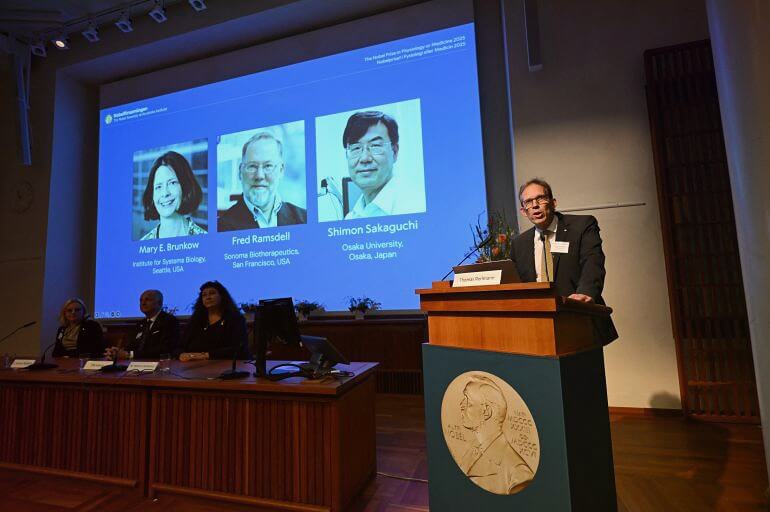
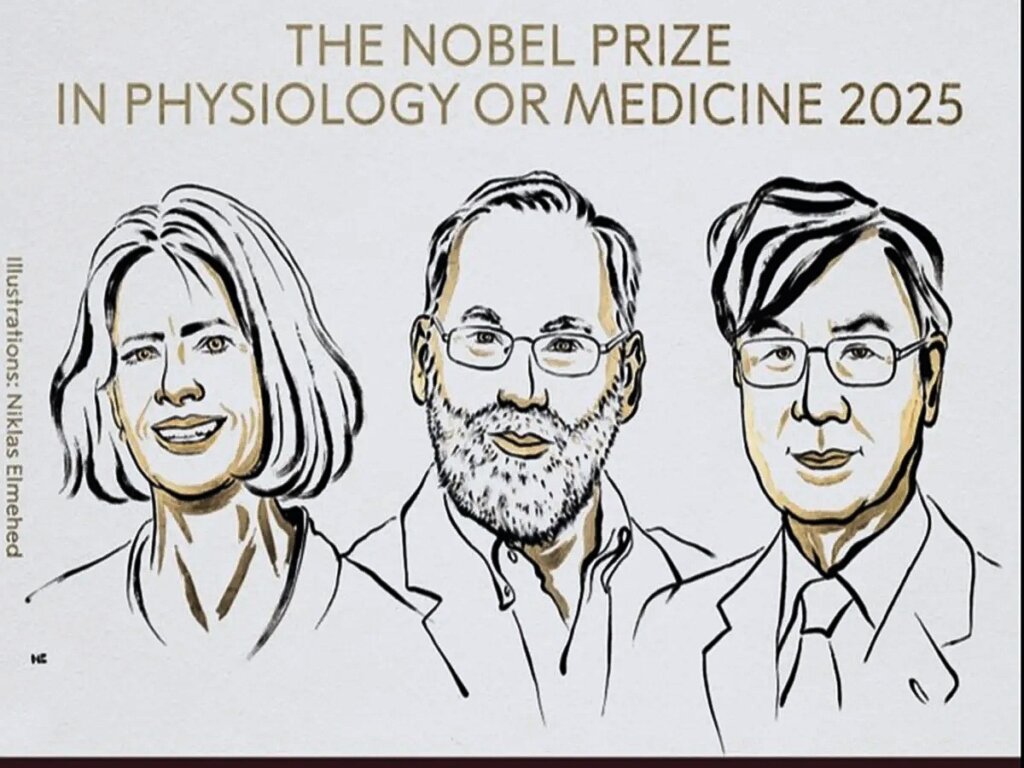
In a historic moment for medical science, the 2025 Nobel Prize in Medicine Awarded has been jointly awarded to three visionary scientists: Mary E. Brunkow, Fred Ramsdell, and Shimon Sakaguchi. They received this prestigious honor for their pioneering work in uncovering the mechanisms of “Peripheral Immune Tolerance.”
This discovery represents a fundamental shift in our understanding of the human immune system, unlocking revolutionary new pathways for treating a wide range of debilitating conditions, from autoimmune diseases like diabetes and multiple sclerosis to improving organ transplantation and cancer immunotherapy.
The Immune System’s Dilemma: How Does it Tell Friend from Foe?
Our immune system is a powerful defense network, constantly working to protect us from bacteria, viruses, and other harmful pathogens. However, this system faces a critical challenge: it must flawlessly distinguish the body’s own cells (“self”) from foreign invaders (“non-self”). When this delicate recognition process fails, the immune system mistakenly launches an attack on the body’s own tissues and organs. This is the root cause of Autoimmune Diseases.
The solution to this problem lies in a biological process known as Peripheral Immune Tolerance. This is the essential mechanism that ensures the immune system maintains “self-tolerance,” preventing it from harming the very body it is designed to protect. It is the built-in safeguard that keeps our internal army from turning on itself.
Regulatory T-Cells: The Discovery of the Body’s Peacekeeping Force
At the heart of peripheral immune tolerance are Regulatory T-Cells (Tregs). Think of them as the immune system’s “peacekeepers” or “brakes.” Their primary role is to suppress overzealous immune responses and ensure that the body’s own cells are not targeted.
2025 Nobel Prize in Medicine Awarded: foundation for this breakthrough was laid in the 1990s by Shimon Sakaguchi. He was the first to identify and characterize a specific subset of T-cells responsible for controlling immune responses. He aptly named these cells “Regulatory T-Cells,” thereby establishing an entirely new field of immunological research.
But a crucial question remained: How are these Tregs produced? What controls them? The answer was uncovered through the collaborative work of Mary E. Brunkow and Fred Ramsdell. They identified the master switch—a key gene responsible for the development and function of these regulatory cells. This gene is known as FOXP3.
The FOXP3 Gene: The Master Controller of Immune Tolerance
The discovery of the FOXP3 gene was a revolutionary turning point. This gene acts as a master instruction manual, directing T-cells to develop into regulatory T-cells and function correctly. When the FOXP3 gene is active, it commands cells to remain tolerant to the body’s own tissues.
Fred Ramsdell’s work in the laboratory definitively proved that without the FOXP3 gene, T-cells cannot acquire their regulatory properties. Meanwhile, Mary E. Brunkow’s genetic research demonstrated the devastating consequences of FOXP3 mutations.
If the FOXP3 gene is faulty, the body fails to produce functional Tregs, leading to a catastrophic breakdown of immune tolerance and the development of severe, often fatal, autoimmune disorders.
A Profound Impact on Medicine: Pioneering New Avenues for Treatment
The collective work of Brunkow, Ramsdell, and Sakaguchi has transcended theoretical knowledge, ushering in a new era of practical medical applications. Its impact is being felt across several critical fields:
1. Transforming the Treatment of Autoimmune Diseases:
This discovery has provided a completely new therapeutic strategy for conditions likerheumatoid arthritis, lupus, multiple sclerosis, and type 1 diabetes.
Researchers are now actively developing drugs and cell-based therapies designed to boost the number or enhance the function of a patient’s own Tregs. The goal is to re-establish immune system control and halt the autoimmune attack, moving beyond merely suppressing symptoms.
2. Improving Outcomes in Organ Transplantation:
2025 Nobel Prize in Medicine Awarded one of the biggest challenges after an organ transplant is preventing the recipient’s immune system from rejecting the new organ as”foreign.”
Patients currently rely on powerful, non-specific immunosuppressant drugs for life, which carry significant side effects, including increased risk of infection and cancer. Treg-based therapy offers an elegant solution. Scientists are working on ways to “educate” a patient’s own regulatory T-cells to accept the transplanted organ as part of “self,” potentially reducing or even eliminating the need for long-term immunosuppression.
3. Unlocking New Frontiers in Cancer Immunotherapy:
This presents a fascinating dual role for Tregs.While they protect against autoimmune diseases, they can sometimes be a hindrance in the fight against cancer. Within the tumor microenvironment, Tregs can inadvertently “protect” cancer cells by suppressing the immune system’s ability to attack them.
Therefore, a major focus in cancer immunotherapy is developing treatments that can temporarily and selectively inhibit Treg activity specifically within the tumor. This would unleash the body’s full immune power to seek out and destroy cancer cells, making existing immunotherapies even more effective.
Conclusion: A Cornerstone for the Future of Human Health
The 2025 Nobel Prize in Medicine is more than just a personal triumph for three brilliant scientists; it symbolizes the dawn of a new chapter in immunology. The work of Mary Brunkow, Fred Ramsdell, and Shimon Sakaguchi has taught us that health is not just about fighting disease, but about maintaining a delicate internal balance.
Their discoveries will serve as the foundation for future breakthroughs in Precision Medicine, Gene Therapy, and advanced Immunotherapy for decades to come. This 2025 Nobel Prize in Medicine Awarded winning research is paving the way toward a future where autoimmune diseases are more manageable, organ transplants are safer and more successful, and our weapons against cancer are more potent and precise.
It 2025 Nobel Prize in Medicine Awarded stands as a golden chapter in humanity’s enduring quest to understand and master the intricate workings of the human body.




Wow, talk about a regulatory T-cell party! These little peacekeepers are finally getting their well-deserved Nobel shine. Its fascinating how FOXP3 is the unsung conductor of this immune orchestra, keeping everything from accidentally attacking the piano player. While we celebrate this breakthrough, lets also chuckle at the thought of potential future treatments: drugs to boost our inner Treg traffic cops or teaching our immune cells to be organ welcoming committee members. Honestly, its amazing our system doesnt have more accidental autoimmune meltdowns – perhaps we should send our Tregs a thank you note! This award is a game-changer, seriously.vong quay may man