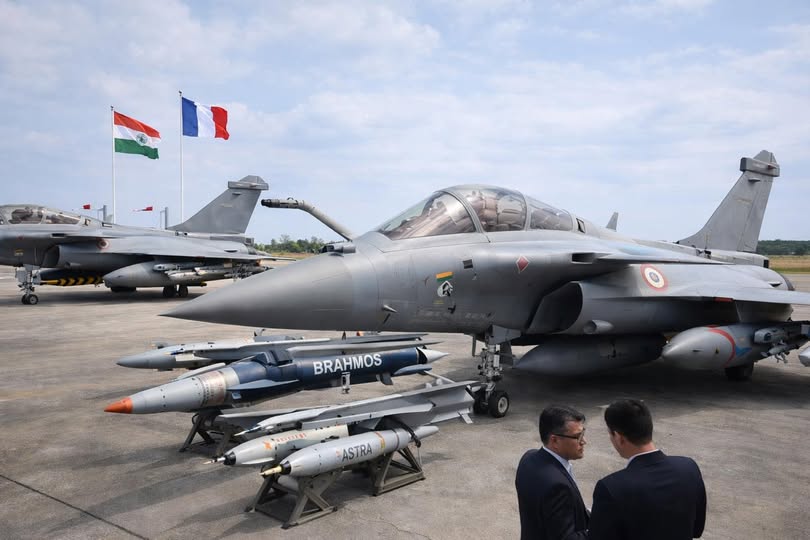
A huge deal of Rafale F4 fighter jets is proposed for India’s air security, with a total value of around Rs 3.25 Lakh Crore Rafale Deal. The deal is being brought in to meet the immediate needs of the Indian Air Force, which has reduced its squadrons to around 30 from the sanctioned number of 42 squadrons.
Increased security challenges, especially near the China border, have put pressure on the government to strengthen the air force quickly.
If the Defense Acquisition Council (DAC) gives the deal Acceptance of Necessity (AoN) this week, then the whole process will begin. The process will include tendering, bidding, technical investigations and price negotiations.
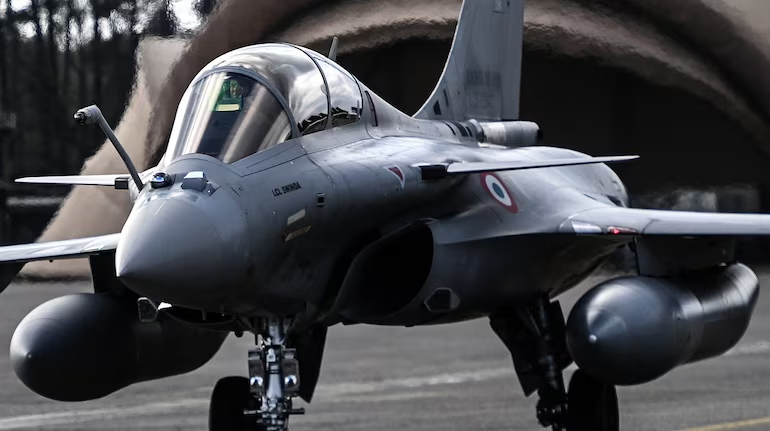
As per the plan, 18 Rafale F4 aircraft will fly directly from France to India, while the remaining 96 aircraft will be manufactured in India, with Dussault partnering with Indian companies like Tata.
The government says it will enhance India’s defense strength and accelerate defense manufacturing in the country. Under “Make in India”, building aircraft in India can lead to technology transfer, employment and industry benefits. French President Emmanuel Macron is also expected to discuss Indo-Pacific security, defense cooperation and technological innovation during his visit to India from February 17 to 19.
Advertisment
OnePlus Nord Buds 3R TWS with 54H playback, 3D spatial audio, AI clear calls, dual device pairing & 47ms low latency.
However, there are questions about the deal. Critics say such an expensive foreign deal could push back India’s indigenous fighter jet Tejas project. He believes that if the government buys more aircraft from abroad, indigenous technology and the dream of a self-reliant India will be weakened.
Some are also asking that the costs are too high, and that the money could be spent on domestic research and development.
On the one hand, the threat to the border is growing and the Air Force needs immediate strength, while the future of the indigenous defense industry is in question. What remains to be seen is how the government strikes the balance—between immediate security needs and long-term self-sufficiency.