
Blue Origin, Jeff Bezos’ aerospace company, has taken bold steps in 2025 — not just in space tourism, but in paving the way for future lunar exploration. From suborbital missions to lunar landers, their innovations are setting the stage for a new era in commercial spaceflight.
Let’s dive into two key topics: the safety advancements in the NS-32 mission and the strategic role of the Blue Moon Pathfinder mission under NASA’s CLPS program.
What New Safety Features Did Blue Origin Introduce in the NS-32 Mission?
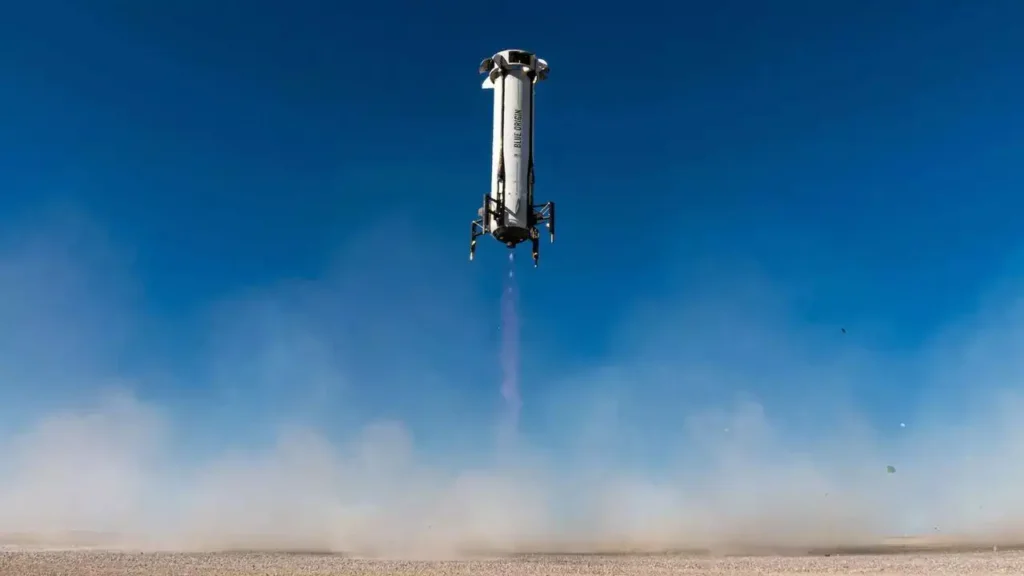
Launched on May 31, 2025, from West Texas, NS-32 marked Blue Origin’s 12th human spaceflight and 32nd New Shepard mission overall. But this wasn’t just another trip to the edge of space — it came packed with new safety and comfort features.
✅ Key Upgrades:
- Enhanced Ventilation System:
The crew capsule featured an upgraded air system for better airflow and comfort during the flight. - Real-Time Biometric Monitoring:
Crew members wore advanced biometric sensors tracking heart rate, oxygen levels, and stress in real time — boosting in-flight safety. - Improved Abort System:
The escape system was upgraded to respond faster in case of an emergency, adding a new layer of protection. - Advanced Communications:
A new encrypted, low-latency communication system ensured clear connection between the crew and ground control.
👨🚀 Human-Centered Design:
Interior enhancements included larger windows, mood lighting, and more ergonomic seating — designed to ease psychological stress during the 10-minute suborbital flight.
👉 Bottom Line:
The NS-32 wasn’t just a tourist ride — it showcased where spaceflight safety and passenger experience are heading.
What Role Will the Blue Moon Pathfinder Mission Play in NASA’s CLPS Program?
Coming in August 2025, the Blue Moon Pathfinder mission will be a major milestone in Blue Origin’s lunar ambitions. It’s designed to test key technologies that will eventually support NASA’s Artemis missions.
🛰️ What Is CLPS?
NASA’s Commercial Lunar Payload Services (CLPS) program partners with private companies to deliver instruments, tools, and research payloads to the Moon — helping prep for human landings later this decade.
🔍 Pathfinder’s Mission Goals:
- Precision Lunar Landing:
The mission will test Blue Origin’s autonomous landing tech, aiming to touch down safely on the Moon’s surface. - Payload Delivery:
Scientific tools from NASA and commercial partners will be delivered for research and lunar surface analysis. - Reusable Lander Prototype:
This will be the first test flight of the company’s Blue Moon Mk1 lander — a reusable vehicle that could be key for future Moon missions.
🔗 Strategic Importance:
- Strengthens Blue Origin’s role in NASA’s lunar plans
- Could lead to more government and commercial contracts
- Lays groundwork for future Moon bases and supply chains
👉 Bottom Line:
While it’s officially a test, Blue Moon Pathfinder might be the foundation of future long-term human presence on the Moon.
Final Thoughts
Blue Origin’s 2025 missions are redefining what’s possible in private spaceflight. The NS-32 mission pushed the envelope for safe, comfortable space tourism, while the Blue Moon Pathfinder is shaping the next chapter of NASA’s lunar strategy.
In short, Blue Origin is no longer just talking about the future — they’re building it.