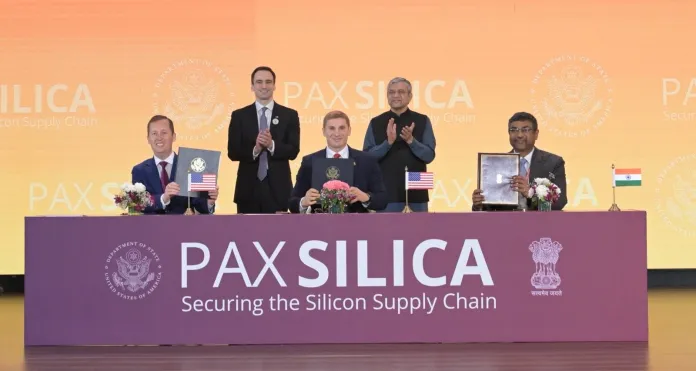
India has now AI Geopolitics 2026 taken a major step into a new era of global technological politics. Recently, India joined the international alliance called “Pax Silica”. The agreement was launched in December 2025 during the Donald Trump administration. India has now become the tenth member of the alliance, joining powerhouses like Japan, Australia and the United Kingdom.
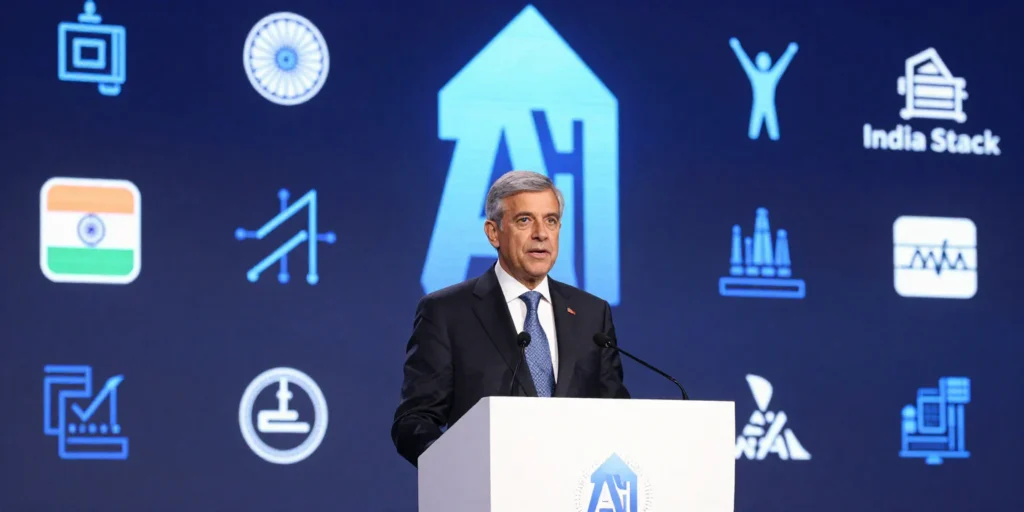
The agreement was signed during the AI Impact Summit held in India. Welcoming the initiative, Ashwini Vaishnaw, Union Minister, Government of India, said the agreement will strengthen India’s semiconductor mission and technology development.
What is Pax Silica?
AI Geopolitics 2026 Pax Silica is a non-binding (non-binding) agreement. This means that there will be no legal pressure on the country involved. The alliance’s main aim is to prepare reliable supply chains — especially in the areas of minerals, semiconductors, energy and artificial intelligence (AI).
The agreement clearly states that there will be no need to force data sharing from any country and no country’s sovereignty will be affected. Everything is based on voluntary cooperation.

What are the benefits for India?
India is now moving towards rapid semiconductor manufacturing. Mobiles, computers, AI chips — all require chips. So far, most of the world’s chip manufacturing is concentrated in a handful of countries. This causes risk in the supply chain.
By joining Pax Silica, India is trying to strengthen its technological base. According to Minister Ashwini Vaishnav, the initiative could create around 1 million skilled jobs in India. This is a huge opportunity for the young population of India.

America’s perspective
The United States describes the alliance as a strategy against “weaponized dependency”. This means that when a country uses economic dependence as a political weapon, this new framework is designed to protect it. The United States wants reliable partners to work together to increase cooperation in semiconductors and AI.
There is also criticism
Some experts acknowledge that India’s involvement in too much US-centric technology alliance could raise questions about its strategic autonomy in the future. However, the agreement clearly states that it is entirely voluntary and will not put pressure on the independent policy of any country.

Conclusions
India’s accession to AI Geopolitics 2026 Pax Silica is not only a diplomatic move, but an important decision from an economic and technological point of view. It can give India a strong position on the global technology map. If the right strategy is adopted, India will not only become self-sufficient in semiconductor production, but can also play a leading role in AI and energy.
Time will tell how much this alliance will accelerate India’s technological revolution, but for now, the move is giving India a new identity on the global stage.