
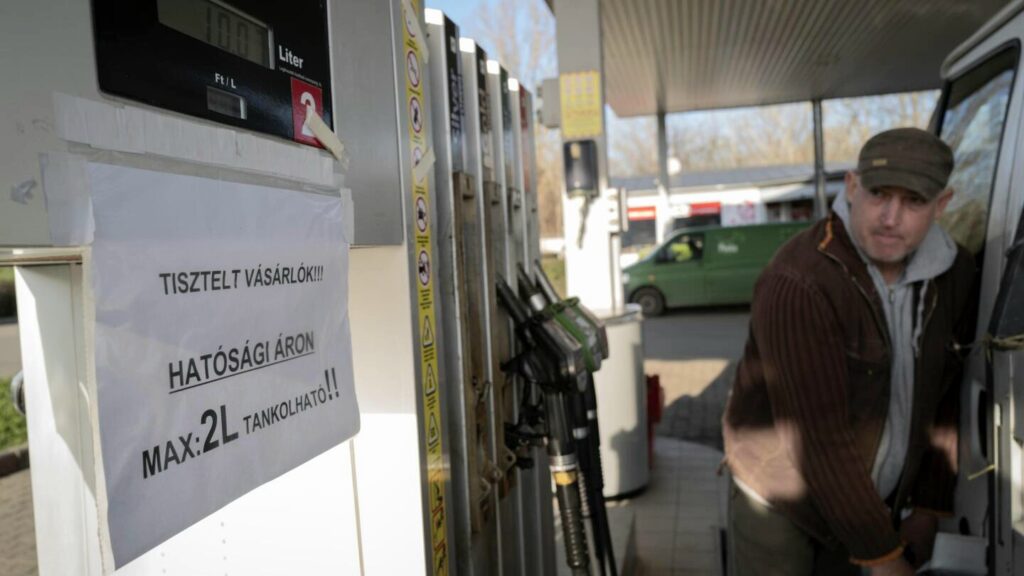
Receiving cheap oil from Russia is not new to Hungary. Most of the EU countries stopped buying crude oil from Russia after the war in Ukraine started, but not Hungary.
Viktor Orban’s government maintained relations with Russia and continued oil imports through the Druzhba pipeline The oil is said to be priced about 10% lower than the global market.
According to a May 2025 report by CREA (Centre for Energy and Clean Air Research), Hungary imported about 4.78 million tonnes of crude oil from Russia in 2024, which was much cheaper than the market price. The report also notes that Russia offered discounts on Hungarian pipeline oil ranging from 20% to 77%, although these discounts were reduced to around 20% by the end of 2024. Despite all this, ordinary Hungarians did not receive significant petrol or diesel price relief.
Why did the exemption not reach the general public?
The biggest answer is that Hungary’s largest oil and gas company, the MOL Group, kept most of the benefits of the exemption The discount from Russia boosted the company’s earnings but did not affect petrol and diesel prices. Simply put, the exemption benefited the companies and the government, but not the public.
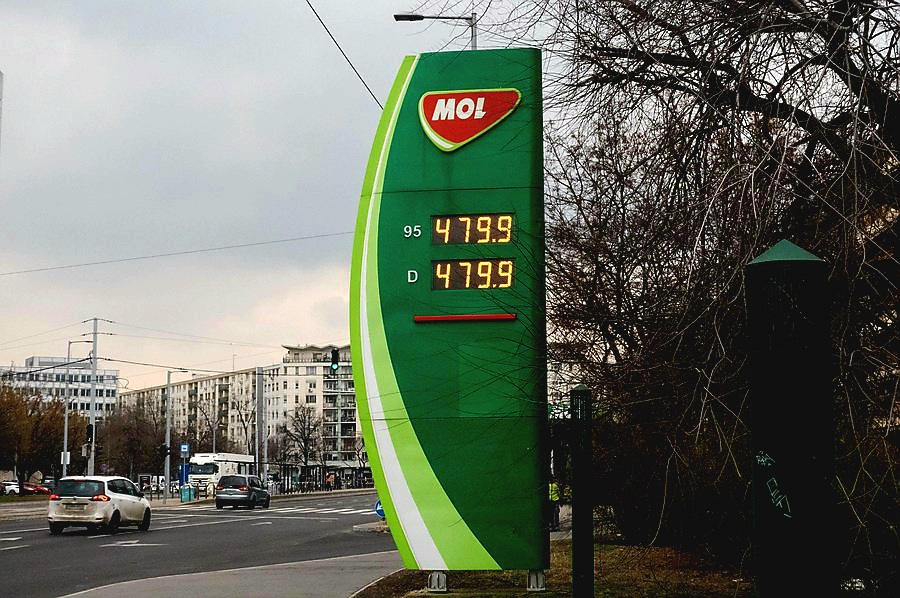
MOL Group profits rose about 30% in 2024 over the previous year. This clearly shows that the benefits of cheap oil went to the owners and shareholders of the companies, not to the general consumer.
Effects of taxation and government policies
In Hungary, taxes play an important role in the price of gasoline. According to the 2024 report of the European Commission, government taxes account for 55% to 60% of the retail price of gasoline in Hungary. This means that even if crude oil becomes 10% cheaper, the benefits will not reach consumers unless the government reduces taxes. The government is using tax revenue to finance its deficit without reducing petrol prices.
political reasons and reliance on Russia
Hungary’s political strategy is also a factor in its purchase of oil from Russia. Prime Minister Viktor Orban has openly opposed Western sanctions, claiming that relations with Russia are part of Hungary’s “national interest.” The economic benefits of this political stance, however, do not reach the general public. Although the Orban government takes credit for low-cost deals with Russia, the reality is that fuel prices in Hungary are comparable to those in countries like Austria and Germany.
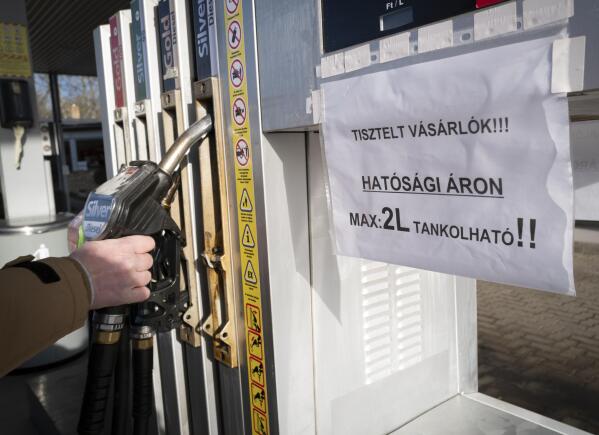
Moreover, imported oil from Russia is subject to transit fees, refining costs and transportation costs, which push prices up even further. As a result, the Russian concessions appear to have had little impact on the ground.
Conclusion: the gain hasn’t disappeared, it’s just been suppressed.
The 10% oil rebate from Russia hasn’t actually vanished—it’s been swallowed up by corporate profits, government taxes, and energy infrastructure spending. CREA and European energy data clearly show that the real benefits of cheap Russian oil never trickled down to ordinary Hungarians. Politically, this was called a “diplomatic breakthrough,” but the economic reality is that consumers did not get cheaper fuel.
So when someone asks, “Where did that 10% gain between Russia and Hungary go?”—the answer is that the 10% was never meant to reach the masses. It was affected by political favoritism, corporate profits, and high taxes. The whole incident not only raises an economic issue, but also raises questions about public trust and government accountability – because when the government makes concessions in the name of the people, the benefits have to be passed on to the people.

Quick and easy fb77706login process. Had no problem getting in and starting to play. Thumbs up from me! Find your login here: fb77706login.
Had no trouble logging into 51 Club using 51clublogin.info. The Website seemed pretty secure. Works without a hitch. Check them out and their 51clublogin.
Thanks for sharing. I read many of your blog posts, cool, your blog is very good. https://www.binance.info/register?ref=JW3W4Y3A
Thank you for your sharing. I am worried that I lack creative ideas. It is your article that makes me full of hope. Thank you. But, I have a question, can you help me?
Your point of view caught my eye and was very interesting. Thanks. I have a question for you. https://accounts.binance.info/zh-TC/register?ref=DCKLL1YD
Your point of view caught my eye and was very interesting. Thanks. I have a question for you. https://www.binance.com/futures/ref?code=IHJUI7TF