
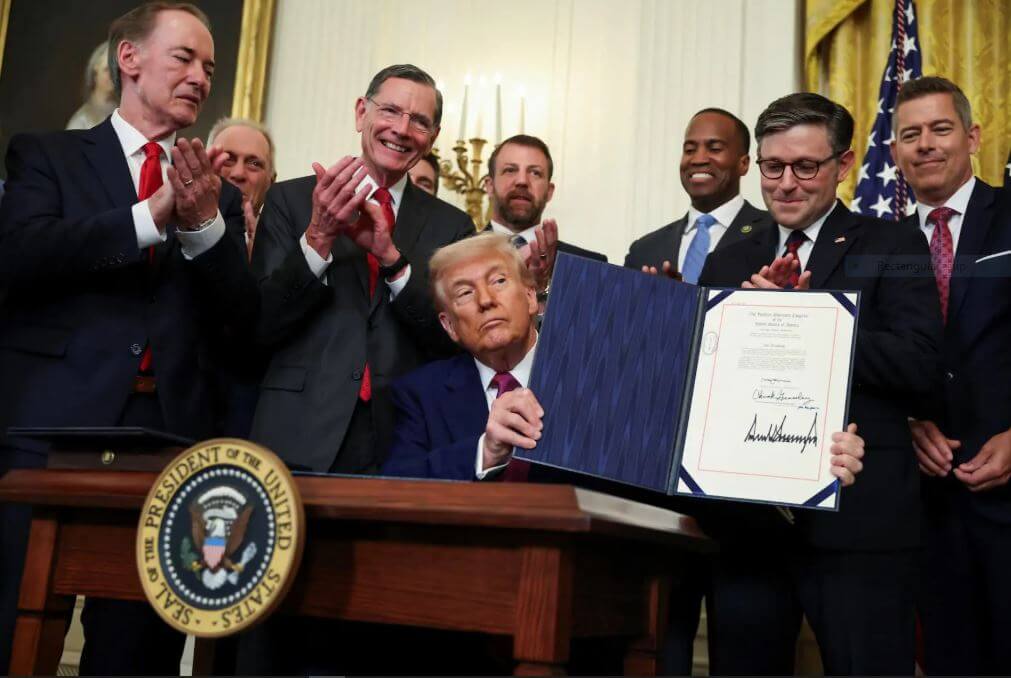
Some serious constitutional debates are going on in the US Supreme Court these days. The Presidential Powers in the United States debate revolves around theories such as “Unitary Executive Theory” and “Originalism,” which could optimize the balance of power and institutional control of the Presidential Powers in the United States. The basic argument of the Unitary Executive Theory is that all the powers of the executive are vested in the President, and therefore he should have complete authority to appoint or remove any official. Some believe the doctrine could lead to excessive centralization of power, weakening the independence of Congress or other independent agencies.
Now, in recent decisions and legal analysis, the question is Presidential Powers in the United States being raised whether the Supreme Court is deviating from its own fundamentalist viewpoint. This has led many legal experts to believe that if the court moves towards giving unlimited executive powers to the President, it could pose a threat to America’s checks and balances system in the future.
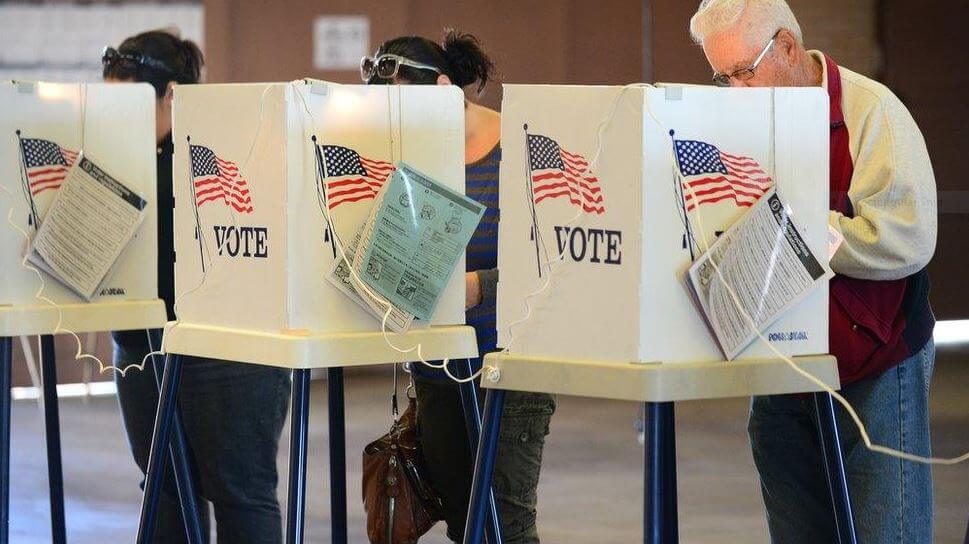
In the US, the Federal Reserve, FTC, or Securities and Exchange Commission are fundamentally subordinate to the executive branch of the President, but in countries like the US, some independent agencies were created to make correct decisions without being influenced by political pressure. But if the President is given the power to remove agencies without cause, the much-vaunted freedoms of democracy may be in danger.
Originalists believe that the Constitution should be interpreted exactly as its creator intended, but Living Constitution advocates believe that society, technology, and the economy have changed, so the Constitution must have evolved over time or it would not be able to address modern problems.
This is not limited to America only but it is both a warning and a warning for every democratic country. In the democracies of many countries in the world, many governments or presidents try to increase their powers, due to which the role of institutions like judiciary, media and parliament starts weakening. If the President of America gets all these powers then he can put the entire democracy in danger.
That is why it is important that democracy maintains the spirit of the Constitution, that is, the balance, accountability and independence of a country so that the balance of power remains the real strength of democracy.
Conclusion
Ultimately, the ongoing debate over Presidential Powers in the United States, the autonomy of independent agencies, and the interpretation of the Constitution could determine the course of American democracy. Unfettered executive control would upset the balance of power and weaken institutional accountability. At the same time, limited but clear powers can ensure effective governance. The true strength of democracy lies in the separation of powers, transparency, and the supremacy of the law. The Constitution should neither be rigid nor left entirely to political will—rather, preserving its spirit while evolving it over time is the true democratic path.


🍀 vòng quay may — Vào trang, nhập các lựa chọn và bấm nút quay: kết quả “rơi” ra tức thì! Bạn có thể bật không lặp lại, điều chỉnh tốc độ, âm thanh, tỷ trọng xuất hiện cho từng lát cắt để tăng độ công bằng. Rất hợp cho chia nhóm, điểm danh, bốc đề, quay quà nhỏ trong team. Giao diện tối giản, không cần đăng ký, tải nhanh trên mọi thiết bị 📱💻. Link có thể chia sẻ để cả nhóm cùng tham gia và đếm ngược hồi hộp 🎉. Lịch sử được lưu lại giúp bạn kiểm soát nhiều vòng quay liên tiếp.
Whoa, hold the presses! This debate over presidential power is more intense than a reality TV finale. Are we heading towards a Unitary Executive where the President holds all the power, making Congress look like its playing Pictionary? Or do we stick to the Originalist view, where the Founding Fathers are basically judging us from the beyond? Its like arguing about whether pineapple belongs on pizza – passionate but maybe a bit silly.
But seriously, the risk to checks and balances is no joke. If the President can just shake off agencies like theyre old shoes, democracys freedom might get stepped on. The tension between a strong executive and maintaining democracys balance is like trying to juggle chainsaws – dangerous but someones gotta try, right?đếm ngược giờ
🏀 Play free with quick loads on Football Bros — try basketball bros unblocked today, with football bros unblocked games so you can jump in anywhere, anytime.
Ah, the eternal dance of power! Presidential Powers seem to be doing the Macarena lately, dont they? While some cheer for a strong Unitary Executive, others worry about turning the White House into a solo act on the world stage. Originalists want it *exactly* as written, while Living Constitution fans say, Hey, flip the channel, the world changed! Its like arguing over whether the Constitution needs a remote!
But heres the kicker: giving the President the magic eraser to wipe away agencies? Thats like letting the director fire the whole cast – including the critics! Sure, more power might mean faster decisions, but at the risk of democracy becoming a one-man show? Seems like a risky tune to dance to. The real strength? Its probably not having all the microphones.tải video YouTube
Thanks for sharing. I read many of your blog posts, cool, your blog is very good. https://www.binance.info/register?ref=IHJUI7TF
Can you be more specific about the content of your article? After reading it, I still have some doubts. Hope you can help me.
Thank you for your sharing. I am worried that I lack creative ideas. It is your article that makes me full of hope. Thank you. But, I have a question, can you help me?
Your point of view caught my eye and was very interesting. Thanks. I have a question for you.
I don’t think the title of your article matches the content lol. Just kidding, mainly because I had some doubts after reading the article.
Your point of view caught my eye and was very interesting. Thanks. I have a question for you.
Thanks for sharing. I read many of your blog posts, cool, your blog is very good.
Your point of view caught my eye and was very interesting. Thanks. I have a question for you.
I don’t think the title of your article matches the content lol. Just kidding, mainly because I had some doubts after reading the article. https://accounts.binance.bh/register/person?ref=IHJUI7TF
Can you be more specific about the content of your article? After reading it, I still have some doubts. Hope you can help me.