
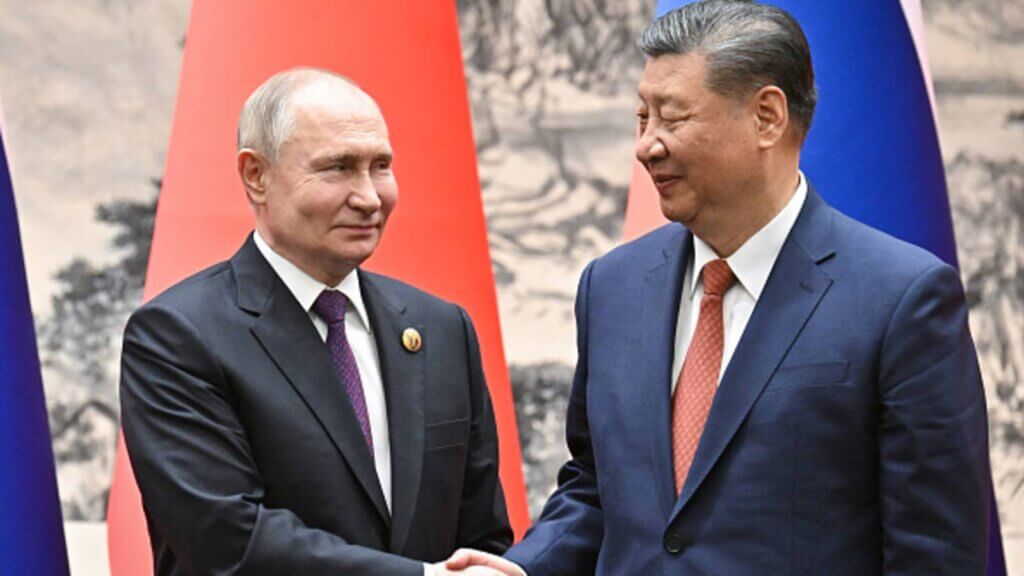
September 2, 2025 – Russia and China have officially signed a long-anticipated deal to build the Power of Siberia-2 pipeline, a project that will pass through Mongolia and deliver massive volumes of natural gas to Beijing. The agreement not only cements Moscow–Beijing energy cooperation but also offers Russia a powerful alternative to the European gas market it lost after the Ukraine war and Western sanctions.
The pipeline, stretching over 2,600 kilometers, will link Russia’s Yamal gas fields in the Arctic with China, moving as much as 50 billion cubic meters (bcm) of gas every year for the next three decades. For Mongolia, the project promises both transit revenues and a larger geopolitical role as a regional energy corridor.
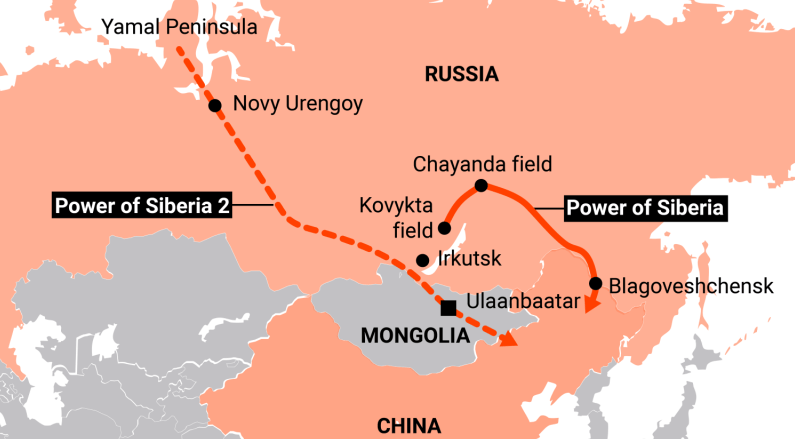
Alongside this deal, Gazprom and China National Petroleum Corporation (CNPC) agreed to expand existing supplies: boosting annual capacity of the Power of Siberia-2 Pipeline from 38 bcm to 44 bcm, and increasing the Far Eastern route from 10 bcm to 12 bcm. This strengthens China’s position as the largest consumer of Russian natural gas.
Advertisement
However, while the signing marks a political milestone, crucial details remain unresolved. Negotiations over pricing, financing, and construction timelines are still underway. Experts note that China is negotiating carefully, ensuring energy security at favorable terms, while Russia is eager to lock in long-term contracts after losing its dominant European market.
Energy analysts believe the pricing of Siberia-2 gas will likely be cheaper than European levels, largely because of the pipeline’s length, challenging terrain, and China’s stronger bargaining position.
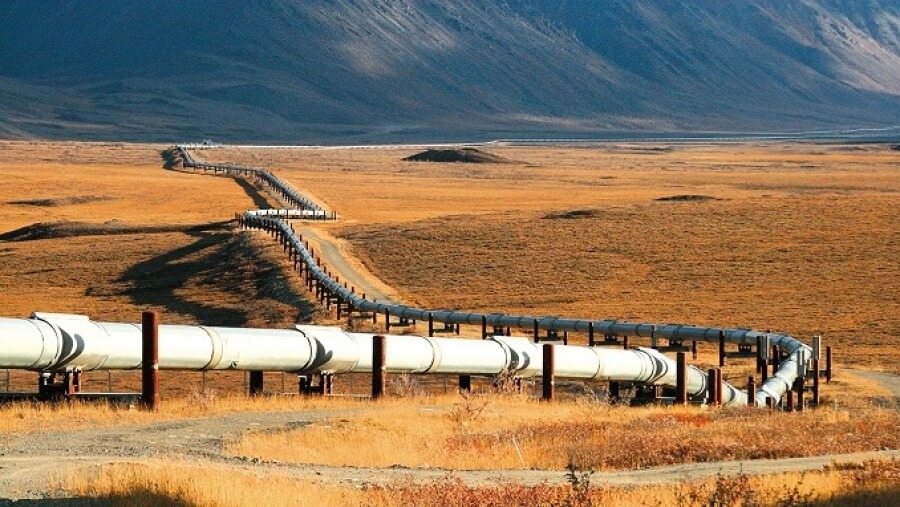
The Power of Siberia-2 pipeline underscores the growing “no-limits” partnership between Moscow and Beijing. For Russia, it represents a strategic lifeline amid isolation from the West, while for China, it secures a stable energy supply at discounted rates.



Slots are fun, but it’s smart to approach them cautiously! Seeing platforms like 777ph login emphasize security & legit play is a good sign. Easy registration & local payment options are a plus too, but remember to gamble responsibly!
Really insightful article! The convenience of mobile gaming is a game-changer, especially with platforms like superph11 game offering legit options & easy access via their app. It’s great to see secure, Philippines-focused platforms emerging!
That’s a great point about accessibility in gaming! It’s cool to see platforms like lodi646 app focusing on localized options like GCash & Tagalog support – makes things so much easier for players here. Definitely a step forward!
I enjoyed reading this article. Thanks for sharing your insights.
Interesting points about responsible gaming! Platforms like legend link maya casino are increasingly focused on KYC & AML compliance-vital for a secure user experience & fair play. It’s good to see that evolving!
Really interesting read! Compliance in online gaming is huge, and it’s good to see platforms like legend link maya online casino prioritizing security & responsible play with things like KYC. Makes for a better experience overall!
I don’t think the title of your article matches the content lol. Just kidding, mainly because I had some doubts after reading the article. https://accounts.binance.com/register-person?ref=IXBIAFVY
Your article helped me a lot, is there any more related content? Thanks! https://accounts.binance.com/register-person?ref=IHJUI7TF
Can you be more specific about the content of your article? After reading it, I still have some doubts. Hope you can help me. https://www.binance.com/ka-GE/register?ref=ILE8IH9H
Your article helped me a lot, is there any more related content? Thanks! https://www.binance.info/register?ref=JW3W4Y3A