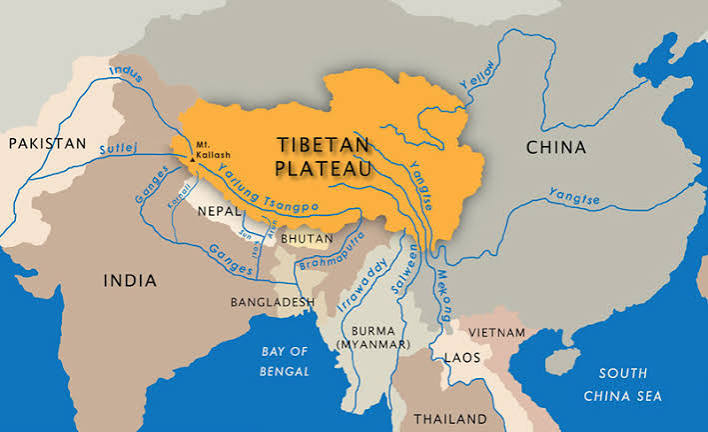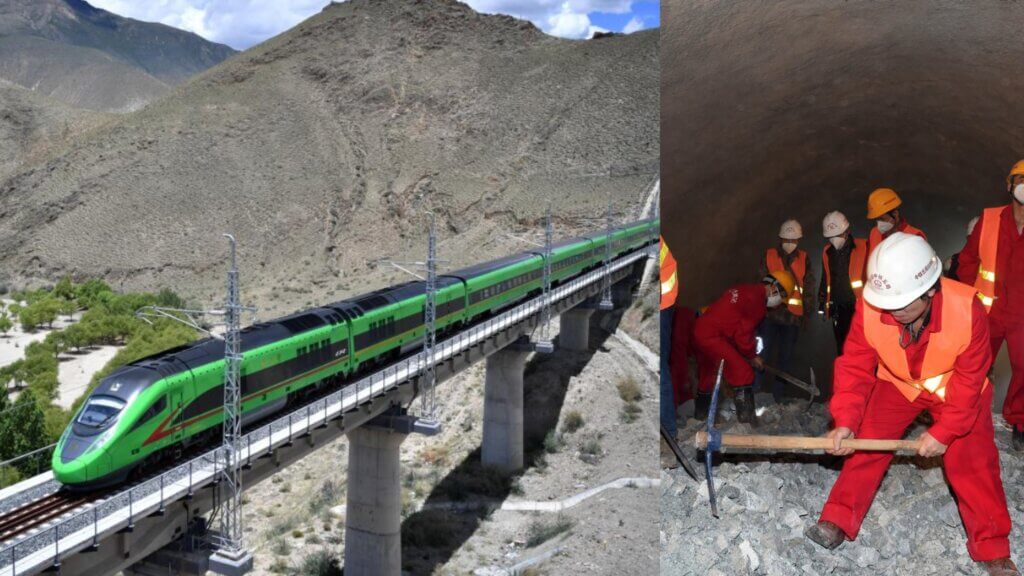
Beijing is preparing to launch one of its most ambitious infrastructure projects yet — the China Tibet Xinjiang Railway — a line that will weave together two of the nation’s most remote and geopolitically sensitive regions: Tibet and Xinjiang.
According to the South China Morning Post, the proposed Xinjiang–Tibet Railway will stretch from Hotan in Xinjiang to Shigatse in Tibet. This high-altitude railway is designed not just for economic growth, but also as a powerful tool of national integration and border security.

Liu Wenxian, a senior official with China Railway, emphasized that western China still has “underdeveloped strategic gateways,” and that boosting connectivity here will strengthen supply-chain stability and energy security.
The first phase — Shigatse to Pailha — could be completed by 2025, with the full Hotan–Shigatse connection expected by 2035. Once finished, the China Tibet Xinjiang Railway will be a key component of Beijing’s 5,000-kilometer “plateau rail framework” centered around Lhasa.
Economically, the project will open trade routes across some of the world’s harshest terrain. Strategically, it will cement Beijing’s influence over regions that have long been restive. Militarily, its proximity to the India–China border has already sparked quiet concern in New Delhi.

Challenges remain — from engineering at extreme altitudes to environmental concerns and high costs — but Beijing has shown a willingness to push forward when the strategic rewards are high.
Ultimately, the China Tibet Xinjiang Railway will be far more than a transport line. It will be a steel artery running across China’s western plateau, carrying not just goods and passengers, but also Beijing’s long-term vision of unity, stability, and power projection.